
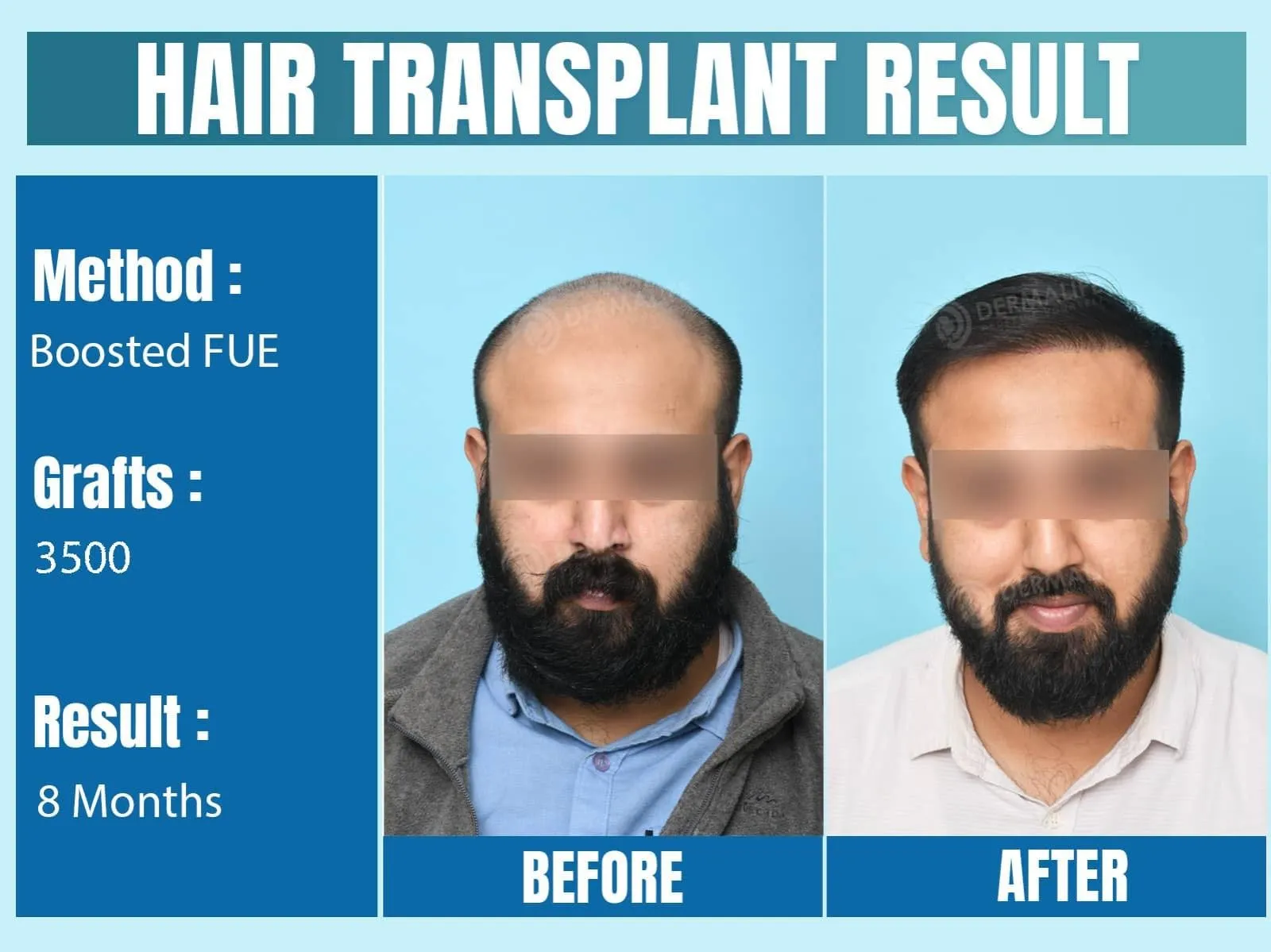
Hair transplantation is designed to restore hair in areas affected by baldness while maintaining a natural appearance. However, not every procedure produces the expected outcome. Some patients notice an unusually straight hairline, uneven density, visible scarring, or transplanted hair growing in an unnatural direction.
These concerns often lead people to question why some hair transplants look unnatural and whether such results can be prevented.
The appearance of a hair transplant depends on several factors, including surgical planning, graft selection, hairline design, donor management, and the surgeon’s understanding of natural hair growth patterns.
1. An Artificial or Poorly Designed Hairline
One of the most noticeable reasons for an unnatural hair transplant is an incorrectly designed frontal hairline.
A natural hairline is not perfectly straight. It usually has subtle irregularities and varies according to facial structure, age, and individual hair characteristics.
If the hairline is placed too low, too straight, or too densely, it may look artificial. A surgeon must consider the patient’s age and the possibility of future hair loss before deciding its position.
2. Incorrect Graft Selection
Natural hair grows in follicular units containing different numbers of hairs. Single-hair grafts are generally important for creating a soft frontal hairline, while multi-hair grafts may be used behind the hairline to build density.
If larger grafts are placed directly along the frontal edge, the result may look coarse or unnatural.
Appropriate graft selection and distribution help create a gradual transition from the frontal hairline to the denser areas behind it.
3. Incorrect Direction and Angle of Hair Growth
Hair does not grow in the same direction across the entire scalp. The frontal region, temples, mid-scalp, and crown have distinct growth patterns.
If transplanted follicles are placed at incorrect angles or directions, the hair may stand out or become difficult to style naturally.
The surgeon must understand the patient’s existing hair pattern and create recipient sites that follow the natural direction of growth.
4. Uneven Density Distribution
A hair transplant is not simply about placing as many grafts as possible into the recipient area. The surgeon must distribute the available grafts according to the size of the bald area, donor capacity, and desired coverage.
If too many grafts are concentrated in one region, other areas may appear thin. Similarly, insufficient planning can create an uneven transition between transplanted and existing hair.
The crown requires particular attention because its natural hair pattern often follows a circular whorl.
5. Excessive Extraction from the Donor Area
The donor area, usually located at the back and sides of the scalp, is a limited resource. Excessive extraction can create patchy thinning or an uneven appearance.
A responsible hair transplant surgeon assesses donor density and plans extraction to preserve the appearance of the donor region.
This is especially important for younger patients who may experience additional hair loss over time and require further treatment in the future.
6. Choosing a Clinic Based Only on Price
Patients searching for an affordable hair transplant in Delhi may come across very different treatment quotations. While hair transplant cost is an important consideration, choosing a clinic only because it offers the lowest price can be risky.
Before selecting a clinic, patients should evaluate the surgeon’s qualifications, experience, surgical involvement, genuine before-and-after photographs, and post-operative care.
They should also ask who performs the critical steps of the procedure and how the clinic manages donor hair.
Can an Unnatural Hair Transplant Be Corrected?
In selected cases, corrective hair restoration may improve an unsatisfactory result. The treatment depends on the reason for the problem.
Correction may involve refining the hairline, improving density, addressing visible scars, or transplanting additional grafts into selected areas.
However, not every case can be completely corrected. Previous surgery may have depleted the donor area or created scar tissue that limits further treatment.
A detailed assessment is essential before recommending another procedure.
Hair Restoration Expertise at Dermalife, New Delhi
Dermalife Skin & Hair Clinic, located in Green Park Extension, South Delhi, provides hair restoration and corrective procedures under the direction of Dr. Gaurav Garg.
Dr. Garg completed his MBBS and MD in Dermatology and Venereology at Seth G. S. Medical College and KEM Hospital, Mumbai. His additional training includes hair transplant surgery in Israel, dermato-surgery at PGI Chandigarh, and advanced dermatology, dermato-surgery, and laser training at the National Skin Centre, Singapore.
The clinic offers FUE-based hair transplantation, its Boosted FUE approach, unshaven FUE, and corrective hair restoration.
For patients unhappy with a previous transplant, the first step is to identify the cause of the unnatural appearance and assess whether further treatment is suitable.
How Can Patients Reduce the Risk of an Unnatural Result?
Before undergoing surgery, patients should:
- Choose a qualified and experienced hair transplant surgeon.
- Discuss a hairline appropriate for their age and facial structure.
- Understand the proposed graft distribution.
- Ask how donor-area extraction will be managed.
- Review genuine results from similar cases.
- Understand realistic growth timelines and limitations.
Final Thoughts
An unnatural hair transplant can result from poor hairline design, incorrect graft placement, unsuitable extraction planning, or inadequate assessment of future hair loss.
The best way to reduce these risks is to choose a qualified surgeon who focuses on individualised planning rather than simply maximising graft numbers. A detailed consultation before surgery can help patients understand the procedure and make a more informed decision.